Per la Santa Sede è altamente prioritaria la soluzione dei conflitti in Medio Oriente


- Dettagli
- Creato: 07 Gennaio 2010
- Hits: 1671
La Chiesa cattolica nel Paese attende il riconoscimento giuridico civile 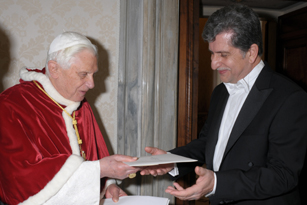
Benedetto XVI ha ricevuto nella mattina di giovedì 7 gennaio, alle ore 11, in solenne udienza, Sua Eccellenza il signor Kenan Gürsoy, nuovo Ambasciatore di Turchia presso la Santa Sede, il quale ha presentato le Lettere con le quali viene accreditato nell'alto ufficio. L'Ambasciatore, rilevato alla sua residenza da un Gentiluomo di Sua Santità e da un Addetto di Anticamera, è giunto alle 10.45 al Cortile di San Damaso, nel Palazzo Apostolico Vaticano, ove un reparto della Guardia Svizzera Pontificia rendeva gli onori. Al ripiano degli ascensori, era ricevuto da un Gentiluomo di Sua Santità e subito dopo saliva alla seconda Loggia, dove si trovavano ad attenderlo gli Addetti di Anticamera e i Sediari. Dalla seconda Loggia il corteo si dirigeva alla Sala Clementina, dove il Diplomatico veniva ricevuto dal prefetto della Casa Pontificia, arcivescovo James Michael Harvey, il quale lo introduceva alla presenza del Pontefice nella Biblioteca privata.
Dopo la presentazione delle Credenziali da parte dell'Ambasciatore avevano luogo lo scambio dei discorsi e, quindi, il colloquio privato. Dopo l'udienza, nella Sala Clementina l'Ambasciatore prendeva congedo dal prefetto della Casa Pontificia, quindi discendeva nel Cortile di San Damaso, dove si congedava dai Dignitari che lo avevano accompagnato e faceva ritorno alla sua residenza.
Questo è il testo del discorso del Papa.
Mr Ambassador,
I am pleased to welcome you to the Vatican and to accept the Letters accrediting you as Ambassador Extraordinary and Plenipotentiary of the Republic of Turkey to the Holy See. I thank you for your gracious words and for the greetings that you bring from your President, His Excellency Abdullah Gül. Please convey to him my own good wishes and assure him of my continuing prayers for the well-being and prosperity of all the citizens of your land.
As Your Excellency has observed, we are fast approaching the fiftieth anniversary of the establishment of diplomatic relations between Turkey and the Holy See, a fruit of the pontificate of my predecessor Pope John xxiii who had himself served as Apostolic Delegate in Istanbul and whose affection for the Turkish people is well known. Much has been achieved during the last fifty years in the areas of shared interest that you have indicated, and I am confident that these cordial relations will grow deeper and stronger as a result of continuing collaboration on the many important questions that currently arise in multilateral affairs.
I recall with great pleasure my own visit to your country in 2006, when I was able to pay my respects to the Turkish people and to members of your Government. I take this opportunity to renew my appreciation for the warm welcome that I received. One of the highlights of that visit was my meeting with Patriarch Bartholomaios I in the Phanar. Within the secular Republic of Turkey, alongside the predominantly Muslim population, the Christian communities are proud to play their part, conscious of their ancient heritage and of the significant contribution they have made to the civilization, not only of your land, but of the whole of Europe. During the recent celebrations of the two-thousandth anniversary of the birth of Paul of Tarsus, that Christian heritage became a focus of particular attention throughout the world, and I should like to express the appreciation of Christians everywhere for the steps that were taken to facilitate pilgrimages and liturgical celebrations at the sites associated with the great Apostle.
My visit to Turkey also provided me with a welcome opportunity to greet members of the Muslim community. Indeed it was my first visit as Pope to a predominantly Islamic country. I was glad to be able to express my esteem for Muslims and to reiterate the commitment of the Catholic Church to carry forward inter-religious dialogue in a spirit of mutual respect and friendship, bearing joint witness to the firm faith in God that characterizes Christians and Muslims, and striving to know one another better so as to strengthen the bonds of affection between us (cf. Address, Meeting with the President of the Religious Affairs Directorate, Ankara, 28 November 2006). It is my fervent prayer that this process will lead to greater trust between individuals, communities, and peoples, especially in the troubled areas of the Middle East.
The Catholics in Turkey appreciate the freedom of worship that is guaranteed by the Constitution, and are pleased to be able to contribute to the well-being of their fellow citizens, especially through involvement in charitable activity and healthcare. They are rightly proud of the assistance provided for the poor by the La Paix and Saint Georges hospitals in Istanbul. In order that these worthy endeavours may flourish, I am sure your Government will continue to do what it can to see that they receive whatever support may be needed. Furthermore, the Catholic Church in Turkey is waiting for civil juridical recognition. This would help her to enjoy full religious freedom and to make an even greater contribution to society.
As a secular democratic state that straddles the boundary between Europe and Asia, Turkey is well placed to act as a bridge between Islam and the West, and to make a significant contribution to the effort to bring peace and stability to the Middle East. The Holy See appreciates the numerous initiatives that Turkey has already taken in this regard, and is eager to support further efforts to put an end to long-standing conflicts in the region. As history has so often shown, territorial disputes and ethnic rivalries can only be satisfactorily resolved when the legitimate aspirations of each party are duly taken into account, past injustices acknowledged and, when possible, repaired. Let me assure Your Excellency of the high priority that the Holy See gives to the search for just and lasting solutions to all the conflicts of the region and of its readiness to place its diplomatic resources at the service of peace and reconciliation.
In offering my best wishes for the success of your mission, I would like to assure you that the various departments of the Roman Curia are always pleased to provide help and support in the fulfilment of your duties. Upon Your Excellency, your family and all the people of the Republic of Turkey, I cordially invoke the abundant blessings of the Almighty.
Questa è una nostra traduzione del discorso del Papa.
Signor Ambasciatore,
sono lieto di accoglierla in Vaticano e di accettare le Lettere che la accreditano quale Ambasciatore Straordinario e Plenipotenziario della Repubblica di Turchia presso la Santa Sede. La ringrazio per le parole cordiali e per i saluti che mi porge da parte del suo Presidente, sua Eccellenza Abdullah Gül. La prego di trasmettergli i miei buoni auspici e di assicurarlo delle mie preghiere costanti per il benessere e la prosperità di tutti i cittadini del suo Paese.
Come Lei, Eccellenza, ha osservato, ci avviciniamo rapidamente al cinquantesimo anniversario dell'instaurazione di relazioni diplomatiche fra la Turchia e la Santa Sede, un frutto del pontificato del mio predecessore Papa Giovanni xxiii, che fu Delegato Apostolico a Istanbul e il cui affetto per il popolo turco è ben noto. Negli ultimi cinquant'anni si è ottenuto molto nelle aree di interesse comune che Lei ha indicato, e confido nel fatto che queste relazioni cordiali possano divenire più profonde e più solide in seguito alla collaborazione costante in molte e importanti questioni che attualmente sorgono negli affari multilaterali.
Ricordo con grande piacere la mia visita nel vostro Paese, nel 2006, quando ho potuto porgere i miei omaggi al popolo turco e ai membri del suo Governo. Colgo quest'opportunità per rinnovare il mio apprezzamento per l'accoglienza calorosa che ho ricevuto. Uno dei momenti salienti di quella visita è stato il mio incontro con il Patriarca Bartolomeo I presso il Fanar. Nella Repubblica laica di Turchia, accanto alla popolazione musulmana predominante, le comunità cristiane sono orgogliose di svolgere il proprio ruolo, consapevoli della loro antica eredità e del contributo significativo che hanno reso alla civiltà, non solo del suo Paese, ma anche di tutta l'Europa. Durante le recenti celebrazioni del bimillenario della nascita di Paolo di Tarso, tale eredità cristiana è divenuta un punto focale di particolare attenzione nel mondo, e desidero esprimere l'apprezzamento dei cristiani ovunque per i progressi compiuti per facilitare pellegrinaggi e celebrazioni liturgiche nei siti associati al grande Apostolo.
La mia visita in Turchia mi ha anche offerto la gradita opportunità di salutare i membri della comunità musulmana. Infatti, è stata la mia prima visita come Pontefice in un Paese a predominanza islamica.
Sono stato lieto di poter esprimere stima ai musulmani e di poter reiterare l'impegno della Chiesa cattolica per far progredire il dialogo interreligioso in uno spirito di rispetto e di amicizia reciproci, recando testimonianza congiunta della salda fede in Dio che caratterizza cristiani e musulmani, lottando per conoscerci meglio reciprocamente al fine di rafforzare i vincoli di affetto fra noi (cfr. Discorso, Incontro con il Presidente del Dipartimento per gli Affari Religiosi, Ankara, 28 novembre 2006). Prego con fervore affinché questo processo conduca a una maggiore fiducia fra individui, comunità e popolazioni, in particolare nelle aree turbolente del Medio Oriente.
In Turchia i cattolici apprezzano la libertà di culto che è garantita dalla Costituzione e sono lieti di poter contribuire al benessere dei loro concittadini, in particolare attraverso l'impegno nell'attività caritativa e nella sanità. Sono giustamente orgogliosi dell'assistenza offerta ai poveri dagli ospedali La Paix e Saint Georges a Istanbul. Affinché questi degni sforzi possano prosperare, sono certo che il Governo continuerà a fare il possibile perché essi ricevano tutto il sostegno necessario. Inoltre, la Chiesa cattolica in Turchia attende il riconoscimento giuridico civile. Ciò le permetterebbe di godere della piena libertà religiosa e di apportare un contributo maggiore alla società.
In quanto Stato democratico laico, tagliato in due dal confine fra Europa e Asia, la Turchia è nella posizione giusta per fungere da ponte fra l'islam e l'Occidente e per rendere un contributo importante allo sforzo di portare pace e stabilità in Medio Oriente. La Santa Sede apprezza le numerose iniziative che la Turchia ha già intrapreso a questo proposito ed è orgogliosa di sostenere sforzi ulteriori per porre fine a conflitti annosi nella regione. Come la storia ha spesso dimostrato, le dispute territoriali e le rivalità etniche si possono risolvere in maniera soddisfacente soltanto quando le aspirazioni legittime di ciascuna parte sono doverosamente prese in considerazione, le ingiustizie passate riconosciute e, se possibile, riparate. L'assicuro, Eccellenza, dell'alta priorità che la Santa Sede assegna alla ricerca di soluzioni giuste e durature a tutti i conflitti della regione e della sua disponibilità a porre le risorse diplomatiche al servizio della pace e della riconciliazione.
Nel porgerle i miei migliori auspici per il successo della sua missione, desidero assicurarla del fatto che i vari dicasteri della Curia Romana saranno sempre lieti di offrirle aiuto e sostegno nello svolgimento dei suoi compiti. Su di lei, Eccellenza, sulla sua famiglia e su tutto il popolo della Repubblica di Turchia invoco di cuore le benedizioni abbondanti dell'Onnipotente.
(©L'Osservatore Romano - 7-8 gennaio 2010)
Benedetto XVI ha ricevuto nella mattina di giovedì 7 gennaio, alle ore 11, in solenne udienza, Sua Eccellenza il signor Kenan Gürsoy, nuovo Ambasciatore di Turchia presso la Santa Sede, il quale ha presentato le Lettere con le quali viene accreditato nell'alto ufficio. L'Ambasciatore, rilevato alla sua residenza da un Gentiluomo di Sua Santità e da un Addetto di Anticamera, è giunto alle 10.45 al Cortile di San Damaso, nel Palazzo Apostolico Vaticano, ove un reparto della Guardia Svizzera Pontificia rendeva gli onori. Al ripiano degli ascensori, era ricevuto da un Gentiluomo di Sua Santità e subito dopo saliva alla seconda Loggia, dove si trovavano ad attenderlo gli Addetti di Anticamera e i Sediari. Dalla seconda Loggia il corteo si dirigeva alla Sala Clementina, dove il Diplomatico veniva ricevuto dal prefetto della Casa Pontificia, arcivescovo James Michael Harvey, il quale lo introduceva alla presenza del Pontefice nella Biblioteca privata.
Dopo la presentazione delle Credenziali da parte dell'Ambasciatore avevano luogo lo scambio dei discorsi e, quindi, il colloquio privato. Dopo l'udienza, nella Sala Clementina l'Ambasciatore prendeva congedo dal prefetto della Casa Pontificia, quindi discendeva nel Cortile di San Damaso, dove si congedava dai Dignitari che lo avevano accompagnato e faceva ritorno alla sua residenza.
Questo è il testo del discorso del Papa.
Mr Ambassador,
I am pleased to welcome you to the Vatican and to accept the Letters accrediting you as Ambassador Extraordinary and Plenipotentiary of the Republic of Turkey to the Holy See. I thank you for your gracious words and for the greetings that you bring from your President, His Excellency Abdullah Gül. Please convey to him my own good wishes and assure him of my continuing prayers for the well-being and prosperity of all the citizens of your land.
As Your Excellency has observed, we are fast approaching the fiftieth anniversary of the establishment of diplomatic relations between Turkey and the Holy See, a fruit of the pontificate of my predecessor Pope John xxiii who had himself served as Apostolic Delegate in Istanbul and whose affection for the Turkish people is well known. Much has been achieved during the last fifty years in the areas of shared interest that you have indicated, and I am confident that these cordial relations will grow deeper and stronger as a result of continuing collaboration on the many important questions that currently arise in multilateral affairs.
I recall with great pleasure my own visit to your country in 2006, when I was able to pay my respects to the Turkish people and to members of your Government. I take this opportunity to renew my appreciation for the warm welcome that I received. One of the highlights of that visit was my meeting with Patriarch Bartholomaios I in the Phanar. Within the secular Republic of Turkey, alongside the predominantly Muslim population, the Christian communities are proud to play their part, conscious of their ancient heritage and of the significant contribution they have made to the civilization, not only of your land, but of the whole of Europe. During the recent celebrations of the two-thousandth anniversary of the birth of Paul of Tarsus, that Christian heritage became a focus of particular attention throughout the world, and I should like to express the appreciation of Christians everywhere for the steps that were taken to facilitate pilgrimages and liturgical celebrations at the sites associated with the great Apostle.
My visit to Turkey also provided me with a welcome opportunity to greet members of the Muslim community. Indeed it was my first visit as Pope to a predominantly Islamic country. I was glad to be able to express my esteem for Muslims and to reiterate the commitment of the Catholic Church to carry forward inter-religious dialogue in a spirit of mutual respect and friendship, bearing joint witness to the firm faith in God that characterizes Christians and Muslims, and striving to know one another better so as to strengthen the bonds of affection between us (cf. Address, Meeting with the President of the Religious Affairs Directorate, Ankara, 28 November 2006). It is my fervent prayer that this process will lead to greater trust between individuals, communities, and peoples, especially in the troubled areas of the Middle East.
The Catholics in Turkey appreciate the freedom of worship that is guaranteed by the Constitution, and are pleased to be able to contribute to the well-being of their fellow citizens, especially through involvement in charitable activity and healthcare. They are rightly proud of the assistance provided for the poor by the La Paix and Saint Georges hospitals in Istanbul. In order that these worthy endeavours may flourish, I am sure your Government will continue to do what it can to see that they receive whatever support may be needed. Furthermore, the Catholic Church in Turkey is waiting for civil juridical recognition. This would help her to enjoy full religious freedom and to make an even greater contribution to society.
As a secular democratic state that straddles the boundary between Europe and Asia, Turkey is well placed to act as a bridge between Islam and the West, and to make a significant contribution to the effort to bring peace and stability to the Middle East. The Holy See appreciates the numerous initiatives that Turkey has already taken in this regard, and is eager to support further efforts to put an end to long-standing conflicts in the region. As history has so often shown, territorial disputes and ethnic rivalries can only be satisfactorily resolved when the legitimate aspirations of each party are duly taken into account, past injustices acknowledged and, when possible, repaired. Let me assure Your Excellency of the high priority that the Holy See gives to the search for just and lasting solutions to all the conflicts of the region and of its readiness to place its diplomatic resources at the service of peace and reconciliation.
In offering my best wishes for the success of your mission, I would like to assure you that the various departments of the Roman Curia are always pleased to provide help and support in the fulfilment of your duties. Upon Your Excellency, your family and all the people of the Republic of Turkey, I cordially invoke the abundant blessings of the Almighty.
Questa è una nostra traduzione del discorso del Papa.
Signor Ambasciatore,
sono lieto di accoglierla in Vaticano e di accettare le Lettere che la accreditano quale Ambasciatore Straordinario e Plenipotenziario della Repubblica di Turchia presso la Santa Sede. La ringrazio per le parole cordiali e per i saluti che mi porge da parte del suo Presidente, sua Eccellenza Abdullah Gül. La prego di trasmettergli i miei buoni auspici e di assicurarlo delle mie preghiere costanti per il benessere e la prosperità di tutti i cittadini del suo Paese.
Come Lei, Eccellenza, ha osservato, ci avviciniamo rapidamente al cinquantesimo anniversario dell'instaurazione di relazioni diplomatiche fra la Turchia e la Santa Sede, un frutto del pontificato del mio predecessore Papa Giovanni xxiii, che fu Delegato Apostolico a Istanbul e il cui affetto per il popolo turco è ben noto. Negli ultimi cinquant'anni si è ottenuto molto nelle aree di interesse comune che Lei ha indicato, e confido nel fatto che queste relazioni cordiali possano divenire più profonde e più solide in seguito alla collaborazione costante in molte e importanti questioni che attualmente sorgono negli affari multilaterali.
Ricordo con grande piacere la mia visita nel vostro Paese, nel 2006, quando ho potuto porgere i miei omaggi al popolo turco e ai membri del suo Governo. Colgo quest'opportunità per rinnovare il mio apprezzamento per l'accoglienza calorosa che ho ricevuto. Uno dei momenti salienti di quella visita è stato il mio incontro con il Patriarca Bartolomeo I presso il Fanar. Nella Repubblica laica di Turchia, accanto alla popolazione musulmana predominante, le comunità cristiane sono orgogliose di svolgere il proprio ruolo, consapevoli della loro antica eredità e del contributo significativo che hanno reso alla civiltà, non solo del suo Paese, ma anche di tutta l'Europa. Durante le recenti celebrazioni del bimillenario della nascita di Paolo di Tarso, tale eredità cristiana è divenuta un punto focale di particolare attenzione nel mondo, e desidero esprimere l'apprezzamento dei cristiani ovunque per i progressi compiuti per facilitare pellegrinaggi e celebrazioni liturgiche nei siti associati al grande Apostolo.
La mia visita in Turchia mi ha anche offerto la gradita opportunità di salutare i membri della comunità musulmana. Infatti, è stata la mia prima visita come Pontefice in un Paese a predominanza islamica.
Sono stato lieto di poter esprimere stima ai musulmani e di poter reiterare l'impegno della Chiesa cattolica per far progredire il dialogo interreligioso in uno spirito di rispetto e di amicizia reciproci, recando testimonianza congiunta della salda fede in Dio che caratterizza cristiani e musulmani, lottando per conoscerci meglio reciprocamente al fine di rafforzare i vincoli di affetto fra noi (cfr. Discorso, Incontro con il Presidente del Dipartimento per gli Affari Religiosi, Ankara, 28 novembre 2006). Prego con fervore affinché questo processo conduca a una maggiore fiducia fra individui, comunità e popolazioni, in particolare nelle aree turbolente del Medio Oriente.
In Turchia i cattolici apprezzano la libertà di culto che è garantita dalla Costituzione e sono lieti di poter contribuire al benessere dei loro concittadini, in particolare attraverso l'impegno nell'attività caritativa e nella sanità. Sono giustamente orgogliosi dell'assistenza offerta ai poveri dagli ospedali La Paix e Saint Georges a Istanbul. Affinché questi degni sforzi possano prosperare, sono certo che il Governo continuerà a fare il possibile perché essi ricevano tutto il sostegno necessario. Inoltre, la Chiesa cattolica in Turchia attende il riconoscimento giuridico civile. Ciò le permetterebbe di godere della piena libertà religiosa e di apportare un contributo maggiore alla società.
In quanto Stato democratico laico, tagliato in due dal confine fra Europa e Asia, la Turchia è nella posizione giusta per fungere da ponte fra l'islam e l'Occidente e per rendere un contributo importante allo sforzo di portare pace e stabilità in Medio Oriente. La Santa Sede apprezza le numerose iniziative che la Turchia ha già intrapreso a questo proposito ed è orgogliosa di sostenere sforzi ulteriori per porre fine a conflitti annosi nella regione. Come la storia ha spesso dimostrato, le dispute territoriali e le rivalità etniche si possono risolvere in maniera soddisfacente soltanto quando le aspirazioni legittime di ciascuna parte sono doverosamente prese in considerazione, le ingiustizie passate riconosciute e, se possibile, riparate. L'assicuro, Eccellenza, dell'alta priorità che la Santa Sede assegna alla ricerca di soluzioni giuste e durature a tutti i conflitti della regione e della sua disponibilità a porre le risorse diplomatiche al servizio della pace e della riconciliazione.
Nel porgerle i miei migliori auspici per il successo della sua missione, desidero assicurarla del fatto che i vari dicasteri della Curia Romana saranno sempre lieti di offrirle aiuto e sostegno nello svolgimento dei suoi compiti. Su di lei, Eccellenza, sulla sua famiglia e su tutto il popolo della Repubblica di Turchia invoco di cuore le benedizioni abbondanti dell'Onnipotente.
(©L'Osservatore Romano - 7-8 gennaio 2010)